Showing posts with label travel. Show all posts

Tuesday, December 23, 2014

New Delhi: trust is good, mistrust is better.

Namaste everyone!
I’m sorry for the absence but I have a slight “blogger’s block”, if we want to give it a name, and I didn’t feel very productive.

After almost three weeks stuck in a snow-coated Bishkek, we finally arrived in India!
We arrived in Delhi three days ago and we spent most of our time in Paharganj, the “backpackers area” where you can everything you need for a fairly cheap price.

Making chapati in Paharganj


I fell in love with this Shiva just in front of our guest house.

But let’s not forget that Indians are passionate merchants and you have to negotiate for almost everything!

But to be honest, apart from this fascinating chaos, we didn’t enjoy New Delhi too much.
For most of the time we have been hampered by self-called “guides”, “taxi drivers” and so on who saw us as walking cash machines.

You can find them everywhere, from Connaught Place to the railway station to the proximities of India Gate.
We can't forget our "firsts" in life: our first love, our first gig, our first elephant...

My recommendation is to NOT TRUST THEM in any way. They will always take you to their friends’ “travel agency” where they will propose you absurd tours of the country for horrendously inflated prices. Not mentioning that your “new friend” will get a commission for bringing new customers.

Poverty is a huge issue in this country and people would do everything for a few extra rupees. They might be peanuts for us but they worth a lot to them, still be ultra-careful!

Don’t listen to them if they tell you that your destination is “closed”, “burnt down”, if “there’s a festival and there is no access” to wherever you want to go. Stand on your ideas and don’t be afraid to shout at them! They obviously want to avoid the police’s attentions so they will scram in no time.

The only legal tourist office in New Delhi is in 88 Janpath, close to the crossing with Tolstoy Road, opposite the Janpath Bazaar stalls.

If you want to buy IndRail pass for reductions and advantages on railway services, you can get them at the Tourist Information Office at the railway station, Chelmsford Road side.

You might meet someone who tries to block you at the entry or convince you to go somewhere else to get the tickets, but don’t believe them and get straight to the office.

Another thing is the road safety: they don’t know what does it mean!
The first thing you’ll notice is the imperious anarchy along the streets, even the tiniest ones!
So be careful when you walk.

If you decide to try a motorickshaw get a prepaid one. They won’t deceive you as they won’t get paid if they don’t take you to your designed destination.

Otherwise be sure that 
they know where your destination is and 
 negotiate the price BEFORE you start the ride.

Yesterday we got a bit lost in Old Delhi and a driver didn’t know where Connaught Place was, plus he had the nerve to ask 100 rupees for the ride, so we walked our way to the city centre.

You should make it with no more than 15-20 rupees for in-town routes.


Other general safety tips:

  • You will find animals everywhere. Dogs, cats, monkeys, cows, pigs, even hawks (no jokes!). Put your animal-loving instinct aside and avoid any contact with them as most of them might be infected (for sure most of them have never seen a vet). Try to avoid going out by yourself at night, most dogs tend to be aggressive in the dark.
  • Don’t drink or brush your teeth with tap water. Try to avoid mouth and genital contact with tap water when you wash yourself. Sealed bottle water is cheap and definitely safer. If you’re in doubt, buy sparkling water as it can’t be recycled. 
  • Try to avoid fresh fruits and vegs as they might have been treated with dirty water. Street food is at your own risk.
  • Don’t give money to any beggar, man, woman, or child, including the ones who sell pens around the streets.They might be part of beggar gangs and you might find yourself surrounded by dozens of people. Children get nothing anyway.
  • Another beggar trick is the powder milk one. You might encounter women with a baby in their arms and a milk bottle asking you to get them some powder milk for the kid. They will take you to a shop where you will pay at least 20 times the original price. The shopkeeper and the woman share the money and the child gets nothing. If you see the child sleeping, he/she’s probably drugged.
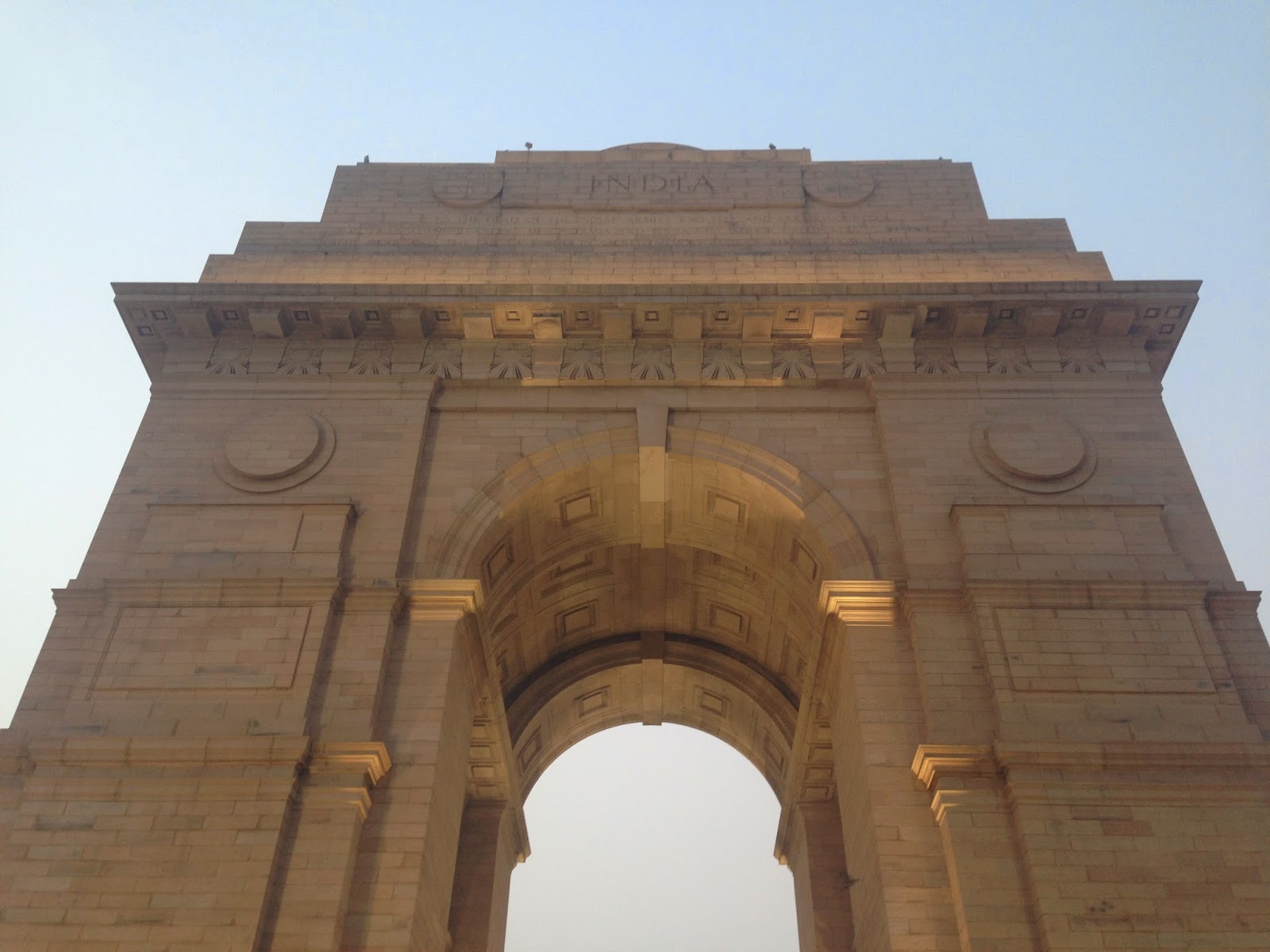
    The majestic India Gate

This is all for now, I promise I will make an effort to write more often.

Next time I will tell you about, Amritsar, the sacred Sikh city!


If I can’t write sooner, I wish you in advance a happy Christmas!

À bientôt!

Friday, November 28, 2014

Nagorno-Karabakh: a "non-existing" place

Hello everyone, first of all I want to apologise for not writing for such a long time.
We have been overwhelmed by a series of unexpected events but we're doing well and we're holding the grip through our journey.

Last week we left Yerevan for Stepanakert, capital of the Artsakh Republic of Nagorno-Karabakh.

Nagorno-Karabakh is a de facto nation, de jure a region in western Azerbaijan.
Historically it's always been Armenian and so is the 95% of population.

Our marshrutka leaves Yerevan in the morning. Just half an hour before approaching the frontier we find a cloud not above, but in front of us. 


The weather suddenly changes and we find ourselves surrounded by the clouds, nothing but a white fog in front of our bus.


And Stepanakert doesn't make exceptions. It's completely white.
People look at us like aliens, with our backpacks and hiking clothes we effectively look "exotic".
Karin (our hosts)'s daughters welcome us as soon as we arrive to their house.
We get the "seat of honour" just in front of the fireplace, and they prepare tea with biscuits, honey and jam for us.
Then Karin arrives and the food on our table starts to multiply. We can't say we've been hungry!
Karin explains to us how the Karabakhi's consideration towards Russia started to change once they started selling weapons to Azerbaijan.
We watch some Russian television and we go to bed, it's been a long day.
The morning after we have breakfast and we start our promenade through Stepanakert.
It's quite dispersive, not a big town, but not very "compact" either unlike any other capital.
We head to the Artsakh State Museum next to the main square and the guide starts following us explaining all the peculiarities of Nagorno-Karabakh.
She tells us about mulberry, the "national fruit" and how they make vodka from it.
She shows us a clay pot which we'll discover being an ancient coffin, and then she leads us to another room with a model of Shushi's monastery and some photos of Gandzasar.


She starts telling us about the true pride of Artsakh, carpets.


Karabakhi carpets are among the finest you can find in Central Asia and the techniques haven't changed till today.

Then her face darkens a bit and she tells us how the Karabakhi feel "prisoners" of Azerbaijan.

"Imagine being a child, being taken away from your mother and forced to stay with your neighbours for more than seventy years. This is how we feel."

Historically, the Artsakh region has always belonged to Armenia, from 189 b. C. to 387 AD, before passing to Caucasian Albania until the 7th century. Around the year 1000 the Kingdom of Artsakh is one of the few Armenian regions which managed to maintain its independence through Turkish invasions during the Middle Age.

Only in the 20th Century, with the Soviet invasion of Transcaucasia, Stalin assigned the region to the Azeri SSR, and even after the fall of the Union, Azerbaijan "keeps" Artsakh in its borders.

But the inhabitants always felt "children of Armenia" with an identity of their own, which you can find in their language, religion and costumes.

This country (I prefer to call it country rather than mere "region") is the most underrated place in Caucasus.

In 2012 some US States, New South Wales in Australia, Euskal Herria, Transnistria, South Ossetia and Abkhazia started recognising the Republic of Nagorno-Karabakh.

We hope some UN countries will start considering this beautiful place next time we'll be there. :)

People like the Karabakhi have a lot to teach to the world. In an era when people are defined by welfare and possessions, they don't care if you're rich or not. They have nothing, but they will always give you what they can.


Monday, November 17, 2014

Quick babbles - the joy of visas and Armenian language

Good evening everyone!
Today I feel extremely bubbly and chatty even though the weather doesn't help in Yerevan.
We started our visa gathering routine and it started in the best manner, as we got out Iranian transit visas!

I want to tell you about our arrival in Yerevan.
We left Tbilisi on Friday morning and after a 6-hour long drive across the mountains, cramped in the back seats of a marshrutka, having a walnut churchkela and tangerines for lunch, we arrived in Armenia.

On Saturday we started exploring the city, spending the afternoon in the History Museum in Republic Square.

Shame the most interesting parts were explained only in Armenian!

Talking about Armenian language, its beautiful alphabet has indeed an interesting story.
In 387 AD Armenia was split in two, Western Armenia (under the Byzantine empire) and Eastern Armenia, which was independent and reigned by the Arsacid dynasty.
The two Armenias then were growing with significant socio-cultural differences.
In 405 the future saint Mesrop Mashtots, supported by Sahak Partev and king Vramshapuh, started creating the first form of Armenian alphabet.
Someone claims that Mashtots invented the Georgian and Caucasian Albanian alphabets as well, but it hasn't been historically confirmed.
What we know is that this alphabet was the only thing which managed to keep the two Armenias together, and helped people keeping their identity alive through the centuries.

To know wisdom and instruction; to perceive the words of understanding

This was the very first sentence, taken from Solomon's Book of Proverbs, which has been translated in the new alphabet.
It is also the motto of the Holy Translators, who managed to preserve some ancient works in Greek and Syriac which have been lost in their original language.

I truly believe in the amazing power of languages. And you?

Friday, November 14, 2014

Hidden Pearls: Tbilisi

Hello everyone, how are things going?
First of all, thank you very much for reading us...your presence is fundamental for us :)
We're thinking about starting a Youtube channel soon, if you have any recommendations or requests please don't hesitate to contact us :)

We just arrived in Armenia, after six days in Tbilisi.
We were pleasantly surprised by the quiet, relaxing beauty of this town and the overwhelming kindness of Georgians, their sense of hospitality and their neverending patience.


We arrived in Georgia on Saturday 6th, after a 27-hour bus ride from Istanbul. Needless to say that we were exhausted and as this wasn't enough we found ourselves at Ortachala station, exactly on the other side of the city from our guest house.
After a quick walk to Gulia Square we crossed a taxi driver who offered his help, though he didn't have any clue about the directions to our destinations.
But he took us anyway close to Marjanishvili Square, which was only a couple of minutes from the guest house.
The manager waited for us until late at night and the morning after he gave us a map of Tbilisi with his recommendations for the best place to visit or for lunch.
So we headed to Rustaveli Avenue, one of the principal arteries of the city, and Freedom Square, where we had khinkali for lunch.
Khinkali are some sort of dumplings with various fillings inside, and the shape reminds vaguely of Japanese nikuman.
They cost nothing (averagely 0,60 lari, 27 eurocents each) and they're extremely good!

Later on we visited the Georgian National Museum, with the famous collection dedicated to the Soviet Occupation era.

It was really touching and it taught us a lot about the Georgians' determination for a free country, their massive efforts and the suffering they bore even after the declaration of independence in 1991.
I will write a further article about it later on.


We loved it so much we didn't resist and we went back there a couple of days later to see the rest of the museum, which includes a wide collection of jewellery from the 3rd Millennium b.C. to the 4th century AD, prehistoric exhibits from the Bronze to the Iron Age, and an Oriental Art wing with paintings, crafts and other various objects mostly from Iran, China and Japan.

Another great spot is the Narikala fortress uphill, which you can reach either with an intricated staircase from the Old City quarter or via ropeway from Europe Square.
Stefano and I are quite afraid of heights so you can imagine the tragicomical situation as soon as we were drifting in the air!
But the sight of the gigantic Kartlis Deda (Mother of Kartli) from a very close distance, and the view of the hills behind the city, were definitely worth the effort.


There is not much up there too apart from the old semi abandoned fortress though, so we descended by foot and we found ourselves in the freshly restorated Sulphur Bath area.

The sad thing of Tbilisi is seeing dozens of casinos and luxury hotes popping out from everywhere like mushrooms, in a desperate effort to appeal the West more and feeling accepted as a potential EU State.
Georgia always felt more European than Asian from the cultural point of view.

In my opinion is good for Georgia to get rid of everything concerning their old status as "Soviet region" and make space for a brand new era, but they constantly risk to lose their true identity for the sake of conformity with the West.

Despite this, Georgia really is a place to discover and I hope to come back here soon to explore it even better.

Next time I will tell you about Armenia and Yerevan, I personally cannot wait to see the house of one of my favourite composers ever, Aram Khachaturian!
See you soon!


(ugly pics by me, good pics by Steve Genzo)

Tuesday, November 11, 2014

it's OK to be a bit lost...more Turkish delight!

It's been two weeks since we officially started our trip and sometimes I have the feeling that we've been "running" a bit too much, mostly because we were overexcited to see this part of world which most people very seldom consider, maybe because it's not "fashionable" as London, Paris or New York would be.

But let me tell you more about Istanbul, the thousands of cats we crossed on our way (I still want to go back there and take them all with me!) and the spell it might cast on you as soon as you cross the city gates.


  • Istanbul smells damn good. I really mean it. Whenever we went out somewhere we could smell chestnuts, Turkish coffee, hookahs, clovers, saffron and dried fruits, no matter where were we.
  • With less than 10 liras you can have a proper meal almost everywhere. There are two cafes in the lower part of the Galata Bridge where you can taste a spartan, but delicious mackerel sandwich with a view over the Golden Horn. All for the price of a Starbucks latte or less.
  • The whole city is a great maze. You can get easily lost but you cannot mind much as the things you find are far more interesting than finding the right route.
  • CATS GALORE. EVERYWHERE. You can have a çay in front of a çay evi (tea house) or çay bahcesi (tea garden) and find yourself surrounded by those little meowing furry balls which we all adore (no excpetions, whoever claims to hate cats is a liar and that's all). Just look for the smallest cafes, the ones with tiny chairs and possibly in slopy alleys. They're cheap and excellent and kitties are free of charge.
  • Turkish food is great. From simit (which I mentioned in my last post-you can find them anywhere in the city from street vendors with tiny red chariots), to manti (Turkish hand made raviolis served with a yogurt sauce. Lots of restaurants now have the habit of exposing a lady making hundreds of mantis from scratch in front of everyone. Though this normally proves the genuine production of this delicacy, the best ones are made in a proper kitchen), to, ça va sans dire, lokum and baklavas for dessert.
  • The Grand Bazaar. It's not necessary to look something to buy here: a view in the late afternoon, as soon as they switch the lights on, is the greatest of souvenirs.
Here's some spare pics, as promised:

The Grand Bazaar is astonishing from floor to ceiling. Literally.


The Blue Mosque, indeed my greatest crush so far.


The Galata Tower was our personal good morning view.


 I'm sorry for the picture placing inconvenience...though I like it, and you?
Talk soon!

Friday, November 7, 2014

East or West?

Hello everyone, I am so excited to tell you everything about Istanbul that I'm blogging directly from my phone, as we're on our way to the next destination and my laptop is currently with the rest of our stuff in the luggage trunk.
So I apologise in advance for the indecent aesthetic of this post :D

It's hard to leave Istanbul, and Turkey generally, after spending a good week losing myself between the prayer calls of the muezzin, the smell of the sea, the taste of simit (our Turkish diet depended for the 90% from these inexpensive, but delightful crowns of bread topped with poppy or sunflower seeds) and çay breaks every now and then.


We've been in the European part of the city for most of our time. Our B&B was in the area of Taksim 1, which in my opinion is the ideal if you prefer a cheap place.
We had the possibility of visiting plenty of places, but the one I loved the most was the Sultanahmet Camii, more famously known as the Blue Mosque.

Hey, I've never ever been into a mosque before!

The first thing that captures your attention is the peace and quiet in the minarets. This Mosque has six.
The Sultan Ahmet commissioned the works for this mosque when he was 19 years old. And he had been reigning for five years at the time!

The mosque contained at first a hospital, a madrasah (a higher education institute), an imaret (soup kitchen), a primary school, a bazaar, a private tomb for the members of the royal family, and a muvakkithane, a time house (please correct me if I'm wrong), where astronomers could watch the stars and make studies for calculating religious holidays and prayer times.

Everyone knows that the worldwide-known denomination of Blue Mosque derives from the dominant colour blue of its interiors.
The walls are covered with more than 21000 tiles from Izmik, old Nicaea, all finely decorated with tulips and other doodles but keeping the colour blue as the dominant one.
The flowery decorations represent the Earth during spring and the Gardens of Paradise.
Another attention-catcher stands in the four fil paye, "elephant paws", pillars of a diameter of 5 meters with an essential Coranic quote at the top of each.

But the wonder and the beauty of this place doesn't stand only in its artworks and aesthetics. It's global, collective and intimate at the same time, and it gets straight to your heart as soon as you decide to get into it.
The ablution ritual, in which you have to wash all your more exposed parts before entering this place, the covering of the hair for women, and taking your shoes off at the entry, are all part of this intricate symbolism which make this place one of the most beautiful I have ever seen so far in my life.
Muslim people have been misunderstood and ostracised through the last years, due to media who constantly search the new "demon" to fight against.
But very few people are clever enough to dig deeper into things and try to fully understand the true meaning of this fascinating world.

Pictures will arrive very soon, I promise, but for the moment that's all! 
See you in Tbilisi, Georgia!
 

Thursday, November 6, 2014

They gave us evil eyes but we didn't mind


On Friday we arrived in Izmir passing through the Greek island of Chios and the frontier town of Çeşme. It was real! We really were in Turkey!
As someone who barely had the chance to travel much and barely set a foot outside her city borders, you can imagine my excitement as the officer at the frontier put a stamp on my passport:
Once we got off our minibus we felt a bit disoriented as the streets are not organised like anywhere else! It took us a while to find our hostel and figure out where were we exactly :)

The history of Izmir is really engaging: born as a small village, in the 8th century BC starts founding colonies in Syria, Lebanon, Greece and the Black Sea.
In short, this city has met plenty of invasions from every possible intruder, it has been destroyed and rebuilt dozens of times, it was Greek, Roman, Byzantine, Venetian, Genoan, from the 15th century Ottoman, before passing to Greece for a few years and then became Turkish after the revolution lead by Atatürk.
This constant change of identity let Izmir mature up one of its own, it became a city where no one was a stranger. It was a model in the Ottoman Empire for being a multicultural, multiconfessional and polyglot city.
This let a new category of inhabitants grow, a mix of Italian, French and Mediterranean blood, called levantines.
Before the Great Fire in 1922, it was possible to notice the striking difference between Turkish and Levantine quarters, especially in the house architecture.

A place you should absolutely visit is the Ethnography Museum, the entry is free of charge and offers lots of inspiration material regarding Turkish costumes and habits.
They explain how evil eye charms, carpets and felt are made, and they have reproductions of n old Ottoman house and some workshops, as everything is disappearing due to industrialization.
There is also a rich section about camel wrestling (!!!), very popular among Nomads of the Aegean region.


Evil eyes and an old chemist laboratory


Camel wrestlers (yes sir) (we obviously dissociate from this kind of animal exploitment)


Carpet loom and crafts


And just next to it there is the Archeology museum, entry is 10 Liras (about 3,60 euros), where you can find a rich detailed history of Izmir and nearby cities (Ephesus, the twelve cities and islands of the Ionian League, and towns as Gryneion and Myrina, founded by the Amazons), with a great section about jewels and ancient money (we were not allowed to take photos there - but I hope you can get there and see them yourself!).


Hygeia (Greek goddess of health)


Bronze bust of Demeter


 You can find them both in the Konak area, not far from the famous Clock Tower and the Kemeralti bazaar.


So, I hope I gave you an idea of what you can find here, and maybe for the next Mediterranean holiday you might pop down here sometimes and see by yourself the richness of this town :)
Next time I will tell you about Istanbul! Hoşçakal!

Thursday, October 30, 2014

Yassas! Athens in a nutshell


Hello everyone, hope you’re doing well!

I promised to come back as soon as we left Italy and here I am reporting the first official branch of our trip directly from the ferry for Chios :)
On Monday evening we took the Superfast ferry from Bari to Patra through Igoumenitsa (17 hours). It was so cold outside that we ended up spending the whole trip sleeping (Stefano) and reading Kerouac (me). 
 On The Road is my book at the moment :)

It rained in Patra and in a couple of hours we already saw the most important parts of the city. So we decided to get a coach to Athens straight after our more than deserved souvlaki (in a pita for Stefano and hero bread for me).
The sight from the coach, though, was a real spectacle. We had the sea by one side and the hills from another, and they magically switched sides as soon as we passed Korinthos.
We approached Athens in the evening and we stayed at the hostel Zeus in Sofokleus, a few meters from the ancient Agora and Monastiraki.
I would actually recommend it as it was the perfect compromise of quality and price (9 euros per night in a 4 bed dorm, clean, discreet, and the staff was really friendly. They even do bar crawls all together at 10pm every night!) and you can reach almost everything in no time.

 
Wall art at Zeus' is quite...unusual. But we had a great time :)

Athens is relatively cheap (for us, it really was!), we managed to eat excellently
for no more than 12 euros including appetisers and drinks. On Wednesday though, we wanted to spoil ourselves a bit and we had ouzo after dinner. 20 euros was the highest bill we paid so far for meals.

Kalamata olives are our current obsession.

You can't talk about Greece without mentioning ouzo. Like French pastis and Italian sambuca, it goes wonderfully down your stomach, but don't do more than two at the time :)


WARNING: The following part is not veg-friendly. If you're vegetarian, vegan, or just easily shockable, you can skip this part.

I woke up on Wednesday morning and I found Stefano looking at me, fully dressed and the largest smile on his face I ever saw.
“I just had the best coffee in the world! And the meat and fish market…you have to see it!”
So i dressed up in a record time and he took me to drink Turkish coffee first, then we went to the Agora Market.
Growing up in city-like towns, I have seen meat and fish only in plastic boxes on supermarket shelves.
It was quite shocking then for me to see whole chickens hanging from steel hooks or calf and pig heads ranged on counters as decorations.
Not mentioning the shark head in the fish area!
Spice nook next to Agora

 
Turkish-style coffee. We will talk later about this :) 


Tea varieties exposed at Mokka cafe in Athinas


The Hellenic Parliament in Syntagma. Hats off for the guard!


Later on we decided to walk up to the temple of Zeus and Syntagma Square, then to Piraeus to book our ferry to Chios.
In Athens we also took the chance to see some friends, Stefano spent the afternoon with his fellow vaper Ioannis from Elcigart and in the evening we had a round of drinks with my friend Jim, bassist from Keepers of Jericho.
Today we spent most of our day gathering energies and right now we’re in the middle of the Aegean Sea on our way to Chios.
I know we barely saw anything considering the mole of stuff you can find here, but time was quite limited and so are our energies and our budget :/ but don't worry, we're planning another visit here...


Τα λέμε σύντομα for now!


Pics by me and Steve Genzo